Key details
Dimensions and specifications
- Length (m / ft)
- 9.7 / 23ft
- Beam (m / ft)
- 1.5 / 6 ft 9in
- Masts
- 2
- Rig type
- dipping lug
- Propulsion
- Oar/Sail
Design and build
- Date of build
- 2017
- Place of build
- Falmouth
Current status
- Present use
- Museum/NMMC
History
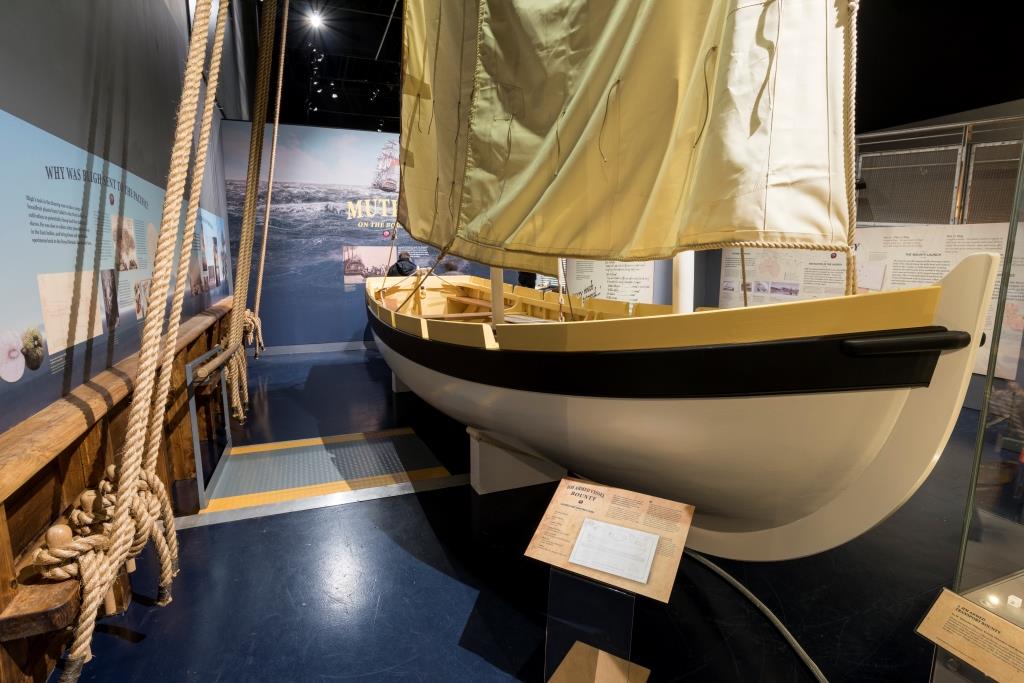
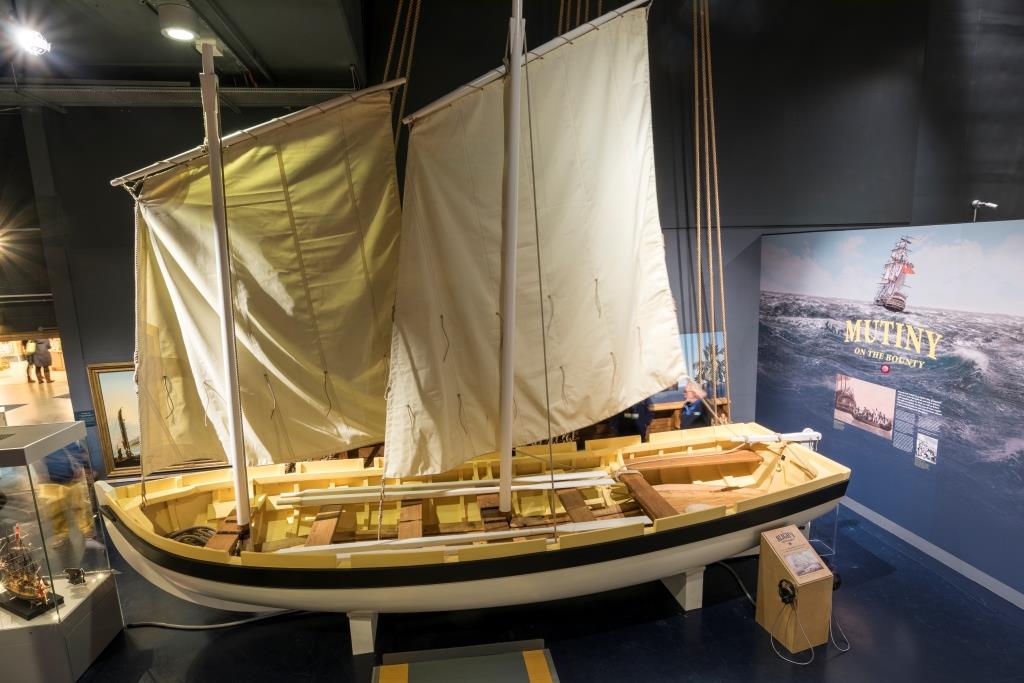
Built by boat builder Andrew Nancarrow with help from a team of NMMC staff and volunteers, the launch represents one of the many types of ships’ boats which were being built for the Royal Navy at the time William Bligh made his voyage. Under normal circumstances it would have been used for a number of tasks including transporting goods and personnel, towing other vessels and laying out ships’ anchors.
After suffering a mutiny aboard HMS Bounty on the 28th of April 1789, Captain William Bligh and 19 loyal men were set adrift in the South Pacific in the ship's launch and undertook the historic 3,618 nautical mile voyage, finally landing in Coupang, Timor 47 days later.
Detailed building plans are no longer available so the boat is the result of much careful research carried out before and during construction in order to make it as authentic as possible. As many independent sources as possible were used to research the construction including a copy of a surviving basic lines plan held by Royal Museums Greenwich (RMG), Bligh's own log of the mutiny and subsequent voyage and various publications relating to boat construction techniques of the era, for example Steele’s Principles and Elements of Naval Architecture, and Steele’s Shipwright’s Vade Mecum.
Research also included a physical and photographic study of HMS Victory’s ship’s boats - although it is acknowledged that they are not originals – and a photographic study of a model of the boat held by RMG the model itself was on loan to an overseas organisation at the time of the project.
The Replica hull is Larch planking on an Oak frame and every effort was made to use natural turns for the Floors and Frames. The Stem is the only laminated section due to being unable to find a large and stable enough turn in one piece of Oak.
Details of the original rig have been lost in time and our interpretation is based on findings within the extensive research that went into the project. Our launch carries an unstayed dipping lug rig on an aft main and smaller fore mast.