Key details
- Current boat name
- ASR 10
- Boat class
- 7323
- Function
- Military
- Type
Dimensions and specifications
Design and build
- Date of build
- 1942
- Place of build
- Wembly
Current status
- Present use
- Museum/SMM
History
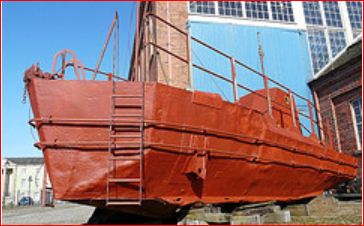
Air Sea Rescue Cuckoo rescue raft.
These craft, code named ‘Cuckoos’, had no engines and were moored along the bomber routes to occupied Europe.
Their role was to provide emergency shelter for the crews of downed aircraft, and each contained vital equipment and supplies, including preserved meat and vegetables, biscuits, tea, cocoa, rum, drinking water, bunks, towels, washing gear, books, and playing cards. These comforts were more to reduce the shock of their ordeal than to prepare them for a long stay. Stranded airmen were able to radio for assistance from the Air Sea Rescue Service, which maintained the craft and ensured that a fast rescue vessel would be sent out. The instructions placed in the float showed that humour prevailed despite the serious situation:
'1. Air sea rescue float No. 10 welcomes you, and hopes that you will be comfortable and that your stay will be short.
2. Though the host is absent you should find all you need. Dry and warm clothing, food, drink, and a smoke, a stove to cook with and blankets to sleep in. Please help yourself but do not consume all the stores the first day'…
Although the floats boosted morale, there are few recorded instances of their use. Of course it was not just British airmen who were able to access the floats. Although Germany had their own version, nicknamed ‘lobster pots’, it was said that German E-boats used to visit to make use of the supplies. A British Air Ministry Inspector recalled one extraordinary visit to a float:
'On entering the cabin I found a young German airman who explained in good English that his plane had ditched close to the raft and that he had swum to it the previous day: since then he had availed himself of its facilities but had not used the radio hoping that an E-boat might come along to take him home…he was taken back to Dover and handed over to the civilian police.'
ASR-10 was built by Carrier Engineering of Wembley as part of a 16 vessel order placed in 1941. Her career after the War is not documented, but she may have ended her working life as a towed naval target on the Clyde. The Museum received her after she lay derelict on the slipway at Battery Park, Gourock, for many years. She remains a representative of the ongoing challenge to save lives at sea, and a reminder of the importance of the sea to Britain during wartime. Scottish Maritime Museum research GH Jan 2013